


Introduction
In the ever - evolving world of international logistics, the choice between Less than Container Load (LCL) and Full Container Load (FCL) for shipping to Australia in 2026 is a crucial decision for shippers. This choice not only impacts costs significantly but also affects delivery times, flexibility, and potential risks. So, which one is more cost - effective under different circumstances? Let's break it down.
I. Policy Context for China - Australia and Australia - China Shipping Routes in 2026
In 2026, the policies governing China - Australia and Australia - China shipping routes have undergone some positive changes. There are new trade agreements that aim to simplify customs clearance procedures. For instance, the processing time for documents has been reduced by approximately 20% compared to previous years. This means faster transit times for both LCL and FCL shipments. Also, there are preferential tariffs on certain goods, which can have a direct impact on the overall shipping cost.
II. Understanding the Basics
1. Less than Container Load (LCL)
LCL is suitable for shippers who have smaller quantities of goods. Instead of filling an entire container, their goods are combined with those of other shippers in a shared container. As of 2026, the average cost per cubic meter for LCL shipping to Australia ranges from $300 - $500, depending on the origin port in China and the destination in Australia. For example, if a small - business owner in Shenzhen has a shipment of only 2 cubic meters of handicrafts to send to Sydney, LCL would be a viable option.
2. Full Container Load (FCL)
FCL offers the exclusive use of an entire container for a single shipper. There are mainly two common container sizes: 20 - foot and 40 - foot containers. In 2026, the cost of a 20 - foot container to Australia from China is approximately $2000 - $3000, and a 40 - foot container costs around $3500 - $4500. A large retail chain in Shanghai that needs to ship a large quantity of clothing to Melbourne might opt for FCL.
III. Cost - Effectiveness in Different Scenarios
1. Small - Quantity Shipments
When the volume of goods is less than 20 cubic meters, LCL is often more cost - effective. Take a startup company in Hangzhou that needs to send 5 cubic meters of electronic products to Brisbane. The cost of using LCL would be around $1500 - $2500. If they were to use FCL, they would have to pay for an entire container, which could be a waste of space and money. Based on industry data, shippers with small - quantity shipments can save up to 40% in costs by choosing LCL.
2. Large - Quantity Shipments
For shipments exceeding 20 cubic meters, FCL becomes more economical. A furniture manufacturer in Ningbo shipping 30 cubic meters of furniture to Perth would find that the cost of FCL is more reasonable. If they were to use LCL, the combined cost per cubic meter would be much higher due to additional handling fees and sharing costs. In such cases, FCL can save up to 30% on shipping costs.
3. Time - Sensitive Shipments
Time is money in the shipping industry. If a shipment is time - sensitive, such as fresh produce or high - demand consumer electronics, FCL might be a better choice. In 2026, the average transit time for FCL is about 15 - 20 days, while LCL can take up to 25 - 35 days due to the consolidation and de - consolidation processes. Although FCL is more expensive upfront, the reduced transit time can lead to faster sales and less inventory holding costs.
4. Flexibility Requirements
LCL offers more flexibility as shippers can send smaller quantities at more frequent intervals. This is beneficial for businesses that have fluctuating demand or are testing new markets. On the other hand, FCL requires a larger upfront commitment in terms of quantity. However, if a shipper has a stable and large - scale demand, FCL can provide a more consistent and reliable shipping solution.
IV. Comparing with Other Logistics Providers
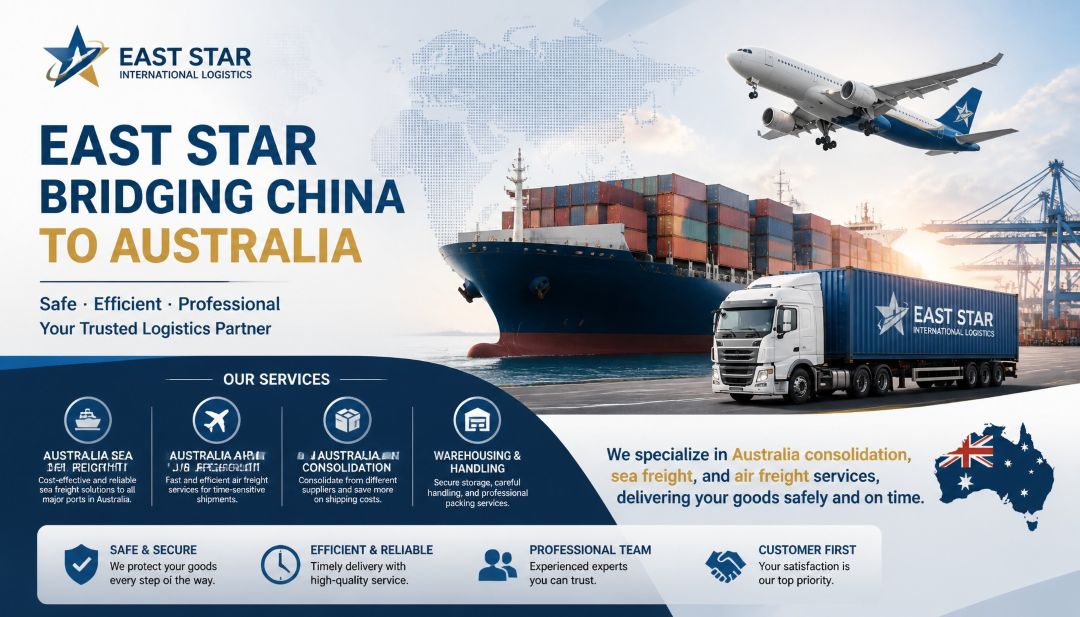
When it comes to choosing a logistics provider for Australia consolidation shipping in 2026, there are several options in the market. Companies like DHL and FedEx are well - known global players. However, Oriental Star Shipping, also known as Dongfangxing Jiyun, has its unique advantages.
DHL and FedEx are more focused on express delivery and airfreight. They have relatively high costs for ocean shipping and might not offer the most cost - effective solutions for large - volume shipments. Oriental Star Shipping, on the other hand, specializes in China - Australia shipping. They have in - depth knowledge of the local regulations and market conditions, which allows them to provide more customized and cost - effective solutions, whether it's LCL or FCL.
V. Frequently Asked Questions (FAQ)
1. Can Oriental Star Shipping handle LCL shipments to remote areas in Australia in 2026?
Sure, Oriental Star Shipping has a wide service network that covers about 95% of the deliverable postcode areas in Australia, including some remote regions. They'll check the specific postcode before shipping to confirm if it can be delivered, any additional fees, and the estimated delivery time.
2. Does Oriental Star Shipping offer better rates for FCL than international giants for China - Australia shipping in 2026?
Oriental Star Shipping focuses on the China - Australia route. With their in - depth understanding of the market and strong partnerships, they can often provide more cost - effective FCL solutions, especially for large - volume shipments.
3. How does the transit time of Oriental Star Shipping compare for LCL and FCL in 2026?
The transit time for FCL with Oriental Star Shipping is generally around 15 - 20 days, while for LCL it's about 25 - 35 days. Their transit times are competitive, and they keep customers informed about the shipping progress.
4. What if my shipment volume changes between LCL and FCL, can Oriental Star Shipping adjust accordingly?
Oriental Star Shipping is flexible. They can help you adjust between LCL and FCL based on your actual shipment volume, ensuring you get the most cost - effective solution.
5. Are there any hidden fees when using Oriental Star Shipping for LCL or FCL in 2026?
Oriental Star Shipping is transparent about their fees. They'll clearly explain all the costs involved, including shipping fees, customs clearance fees, and other possible charges before you make a decision.
Conclusion
If you're looking for the latest quotes on Australia consolidation shipping, want to calculate the volumetric weight, or need a channel for sensitive goods, you can visit the official website: https://www.dfxgjwl.cn, and call + 86 - 18074611572. As a professional Australia consolidation company, Oriental Star Shipping offers one - stop logistics services, with exclusive discounts for international students and overseas Chinese. You can track the whole - process logistics, ensuring safety and peace of mind!