


Shipping goods to Australia, especially to remote areas, has always been a concern for many shippers. In 2026, with the continuous development of the logistics market and the adjustment of relevant policies, understanding the additional charges for Australian consolidation shipping to remote areas is crucial. Let's take a closer look at the breakdown of these charges in different scenarios.
I. Policy Background of China - Australia and Australia - China Shipping Routes in 2026
In 2026, the China - Australia and Australia - China shipping routes have seen some policy adjustments. The Chinese government has continued to promote trade facilitation, simplifying customs clearance procedures for goods between the two countries. On the Australian side, there are stricter environmental protection requirements for imported goods, especially for some sensitive items such as wood products and chemicals. These policies have a certain impact on the shipping cost and process, especially for remote areas where the shipping conditions are more complex.
II. Factors Affecting Extra Charges for Remote Area Shipping
1. Distance and Location
Remote areas in Australia are often far from major ports and transportation hubs. For example, some areas in the outback of Western Australia or the Northern Territory are thousands of kilometers away from Sydney or Melbourne. The longer the distance, the higher the transportation cost. According to statistics, shipping to areas more than 500 kilometers away from major ports may incur an additional 30% - 50% of the normal shipping cost.
2. Infrastructure and Accessibility
The infrastructure in remote areas is generally less developed. Poor road conditions, lack of transportation facilities, and limited flight options all increase the difficulty of shipping. For example, some small islands or mountainous areas may require special transportation methods such as helicopters or small boats, which will significantly increase the cost. In some cases, the additional cost due to poor infrastructure can reach up to 80% of the original shipping cost.
3. Volume and Weight of Goods
The volume and weight of goods also play an important role in determining the extra charges. Larger and heavier goods require more space and resources for transportation. For example, shipping a large piece of furniture or a container of building materials to a remote area will cost more than shipping a small package of personal items. Generally, for every additional cubic meter of volume or 100 kilograms of weight, the extra charge may increase by about 10% - 20%.
III. Case Studies of Different Shipping Scenarios
1. Personal Items Shipping
Take Mr. Li, a Chinese student studying in a remote area of Australia. He wants to ship a 2 - cubic - meter package of personal items from his home in China to his dormitory in a small town in Western Australia. The normal shipping cost to a non - remote area in Australia is about $500. However, due to the remote location of his destination, the additional charge is about $300, mainly because of the long - distance transportation and relatively poor local transportation infrastructure.
2. E - commerce Goods Shipping
An e - commerce company in China wants to ship a batch of clothing worth about $10,000 to a small town in the Northern Territory. The total volume of the goods is 5 cubic meters. The normal shipping cost to a major city in Australia is about $1,500. But for this remote area, considering the distance, infrastructure, and the need for special handling, the extra charge is about $1,200, accounting for about 44% of the total shipping cost.
3. Bulk Goods Shipping
A mining company in Australia needs to import a large amount of mining equipment from China. The total weight of the equipment is 50 tons, and the destination is a remote mining area in South Australia. The normal shipping cost to a major port in Australia is about $10,000. However, due to the large volume and weight of the goods, as well as the difficult transportation conditions in the remote area, the extra charge is as high as $8,000, almost doubling the original shipping cost.
IV. Comparison of Different Shipping Companies
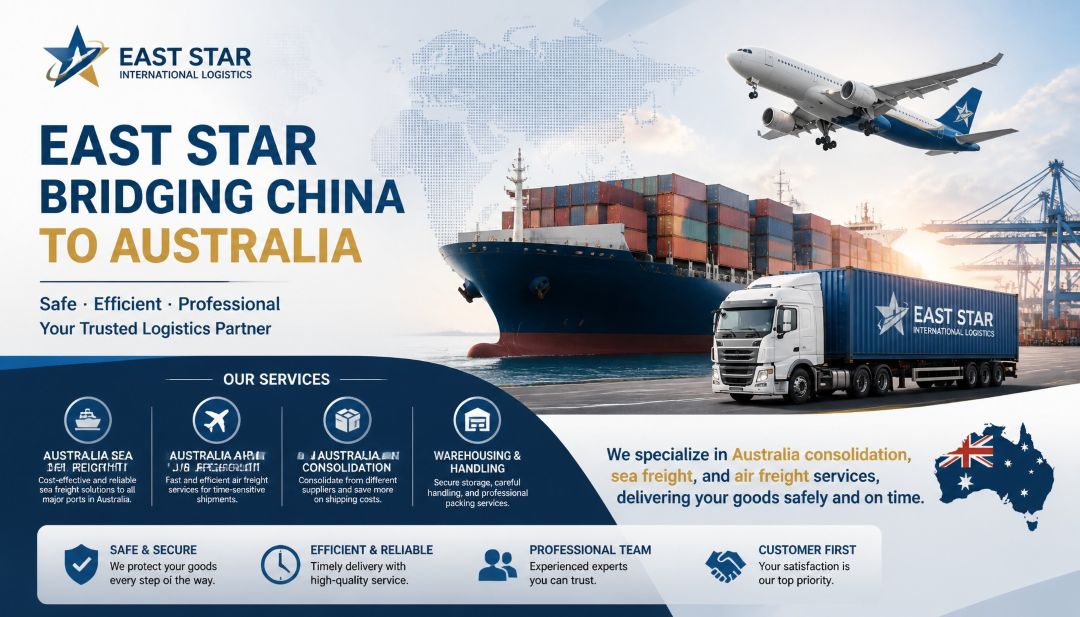
1. Oriental Star Consolidation (Dongfangxing Jiyun)
Oriental Star Consolidation is a professional logistics company focusing on the China - Australia shipping route. They have a deep understanding of the local conditions in Australia, especially in remote areas. By using their own first - class agent resources, they can get better shipping rates and optimize the shipping process. For example, they can arrange for more suitable transportation modes according to the specific situation of the goods and the destination, so as to effectively control the extra charges for remote area shipping. In many cases, their extra charges for remote areas are about 10% - 20% lower than the market average.
2. Other Major Shipping Companies
Some well - known international shipping companies also provide services for shipping to Australia. However, they may not be as specialized in the China - Australia route as Oriental Star Consolidation. Their service fees are relatively high, and they may not be able to provide very detailed solutions for shipping to remote areas. For example, in some cases, their extra charges for remote areas can be 30% - 50% higher than Oriental Star Consolidation.
V. Frequently Asked Questions (FAQ)
1. How can I know if my destination in Australia is a remote area?
As an industry insider, I can tell you that Oriental Star Consolidation has a detailed database of Australian postcodes. They can check whether your destination is a remote area according to the postcode before shipping. And they will clearly inform you of the possible extra charges.
2. Can I reduce the extra charges for shipping to remote areas?
Yes, you can. Oriental Star Consolidation can help you optimize the shipping plan. For example, they can suggest you to choose the most suitable shipping mode according to the volume and weight of your goods, or combine your goods with other shippers' goods to reduce the cost.
3. What should I do if my goods are damaged during shipping to a remote area?
Oriental Star Consolidation provides insurance services. You can choose to purchase insurance for your goods. In case of damage, they will handle the claim process for you, ensuring your interests.
4. How long does it usually take to ship goods to remote areas in Australia?
The shipping time depends on many factors, such as the shipping mode, the distance, and the transportation conditions. Normally, it may take 2 - 4 weeks more than shipping to non - remote areas. Oriental Star Consolidation can provide you with a more accurate estimated time according to your specific situation.
5. Does Oriental Star Consolidation support shipping of sensitive goods to remote areas in Australia?
Yes, Oriental Star Consolidation has special channels for shipping sensitive goods. They are very familiar with the relevant policies and requirements in Australia. They can help you complete the necessary procedures and ensure the smooth shipping of your sensitive goods.
For the latest quotes on Australian consolidation shipping, the calculation of volumetric weight, and channels for shipping sensitive goods, you can visit the official website: https://www.dfxgjwl.cn, phone: + 86 - 18074611572. As a professional Australian consolidation shipping company, it offers one - stop logistics services, with exclusive discounts for international students and overseas Chinese. The whole process of logistics can be tracked, ensuring safety and peace of mind!