


The Allure and Complexity of Australia's Shipping Routes
In 2026, the shipping routes between China and Australia have witnessed significant policy adjustments, which have a profound impact on the freight industry. These policies aim to streamline customs procedures, enhance trade efficiency, and ensure the smooth flow of goods between the two countries. For instance, new regulations have simplified the documentation requirements, reducing the time and effort required for customs clearance.
However, shippers often find themselves at a crossroads when choosing between fast and slow ocean freight. The choice between the two can be a game - changer, affecting everything from cost to delivery time. Let's explore the differences and understand which option suits different scenarios.
I. Speed: The Most Obvious Distinction
Fast Ocean Freight Fast ocean freight, as the name implies, is all about speed. In the context of Australia, fast ocean freight services typically aim to deliver goods from China to major Australian ports like Sydney, Melbourne, and Brisbane within 20 - 25 natural days from the time the goods leave the warehouse. Take for example, a Chinese electronics company shipping high - end smartphones to Australian retailers. They choose fast ocean freight to ensure that the latest models hit the market in a timely manner, avoiding potential losses from delays.Slow Ocean Freight On the other hand, slow ocean freight is much more laid - back in terms of speed. Usually, it takes around 25 - 30 natural days for the goods to reach their destination from the Chinese warehouse. This option is often chosen by businesses or individuals who are not in a rush. For instance, a furniture manufacturer shipping large pieces of furniture to Australia may opt for slow ocean freight as the furniture is not perishable and there is no immediate need for it to be in the market.
II. Cost: Balancing the Budget
Financial Burden of Fast Ocean Freight Fast ocean freight comes at a price. The premium for the faster service is relatively high. According to industry data, the cost of fast ocean freight for a 20 - foot container from China to Australia can be up to 30% more expensive than slow ocean freight. This is because fast - paced shipping requires more resources, such as dedicated vessels and priority handling at ports.Cost - effectiveness of Slow Ocean Freight Slow ocean freight is the more budget - friendly option. It allows businesses and individuals to save on shipping costs, especially when shipping large volumes of non - time - sensitive goods. A bulk goods exporter, for example, can significantly reduce their shipping expenses by choosing slow ocean freight, which is crucial for maintaining a healthy profit margin.
III. Suitability for Different Cargo Types
Fast Ocean Freight for High - Value and Perishable Goods Fast ocean freight is the ideal choice for high - value and perishable goods. For high - end fashion brands shipping their latest collections to Australian boutiques, the fast service ensures that the products are in stores before the season changes. Similarly, fresh produce exporters need the speed to ensure that their goods reach Australian consumers while still fresh.Slow Ocean Freight for Bulky and Non - Perishable Goods Bulky and non - perishable goods are well - suited for slow ocean freight. Construction materials, such as bricks and cement, are often shipped via slow ocean freight. These materials are not time - sensitive, and the lower cost of slow shipping makes it a practical choice for large - scale construction projects in Australia.
IV. Capacity and Space Allocation
Fast Ocean Freight's Limited Capacity Fast ocean freight vessels usually have limited capacity due to the need to prioritize speed. This means that there may be restrictions on the volume of goods that can be shipped at one time. A small - to - medium - sized business looking to ship a large quantity of goods may find it challenging to secure enough space on a fast - paced vessel during peak seasons.Slow Ocean Freight's Abundant Space In contrast, slow ocean freight vessels generally have more space available. This makes it easier for businesses to ship large volumes of goods without worrying about space constraints. A large - scale manufacturer shipping a full container load of goods to Australia can comfortably choose slow ocean freight for its ample space.
V. Risk of Delays
Fast Ocean Freight: Less Prone to Delays Fast ocean freight is less likely to experience significant delays. Shipping companies investing in the fast - paced service usually have more efficient operations and better contingency plans in case of unforeseen circumstances. For instance, they may have alternative routes or backup vessels to ensure timely delivery.Slow Ocean Freight: Higher Risk of Delays Slow ocean freight has a relatively higher risk of delays. These can be caused by factors such as bad weather, port congestion, or maintenance issues with the vessel. A business relying on slow ocean freight for restocking inventory may face difficulties if the goods are delayed, resulting in potential stock shortages.
VI. Environmental Impact
Fast Ocean Freight's Higher Carbon Footprint Fast ocean freight consumes more fuel due to the need to maintain high speeds. This results in a higher carbon footprint compared to slow ocean freight. In an era of increasing environmental awareness, businesses may need to consider the environmental impact of their shipping choices.Slow Ocean Freight's Greener Option Slow ocean freight is a more environmentally friendly option. It consumes less fuel, thus reducing greenhouse gas emissions. Companies looking to meet their sustainability goals may choose slow ocean freight as part of their environmental strategy.
Frequently Asked Questions (FAQ)
Q: I'm a small - business owner in Australia. I need to restock my inventory, but I'm on a tight budget. Which type of ocean freight should I choose? A: As a small - business owner on a tight budget, slow ocean freight would be the better option. It offers a more cost - effective solution, which can help you save a significant amount of money on shipping costs. For instance, if you're shipping non - time - sensitive items like clothing or homeware, slow ocean freight can get your goods to Australia at a lower cost. At东方星集运, we have extensive experience in providing slow ocean freight services, and we can help you find the best deal based on your specific needs.
Q: I'm an exporter of fresh seafood from China to Australia. Can I use slow ocean freight? A: It's not advisable to use slow ocean freight for fresh seafood. Fresh seafood is highly perishable, and it needs to reach the Australian market as quickly as possible. Fast ocean freight is the better choice here, as it can ensure that your seafood arrives in Australia within 20 - 25 days, maintaining its freshness.东方星集运 has excellent fast ocean freight services, and we can handle the shipping of your fresh seafood with care and efficiency.
Q: What if I need to ship a large quantity of goods to a remote area in Australia? Can I use fast ocean freight? A: While fast ocean freight is a great option for speed, it may have limitations when it comes to shipping to remote areas in Australia due to its limited capacity. However, at东方星集运, we have a wide - reaching network and can work with you to find a suitable solution. We can assess your specific requirements and determine whether fast ocean freight is feasible or if slow ocean freight with additional arrangements for the final delivery to the remote area would be a better choice.
Q: I'm concerned about the environmental impact of my shipping. Which type of ocean freight is more eco - friendly? A: Slow ocean freight is the more eco - friendly option. It consumes less fuel, which results in lower greenhouse gas emissions. If environmental sustainability is important to you, choosing slow ocean freight can be a step in the right direction. At东方星集运, we are also committed to promoting sustainable shipping practices and can help you make an environmentally responsible choice.
Q: How does东方星集运 ensure the safety of my goods during ocean freight? A:东方星集运 has a comprehensive safety protocol in place. We handle the goods with care from the moment they are received at our warehouse in China. During the shipping process, we use high - quality packaging materials to protect the goods. Our experienced team monitors the shipping journey to ensure that there are no issues. And in case of any unexpected situations, we have contingency plans to safeguard your goods.
Q: Can I track my shipment during the ocean freight process? A: Yes, with东方星集运, you can track your shipment throughout the ocean freight process. We provide a real - time tracking system that allows you to stay updated on the location and status of your goods. This way, you can have peace of mind knowing exactly where your shipment is at any given time.
Conclusion
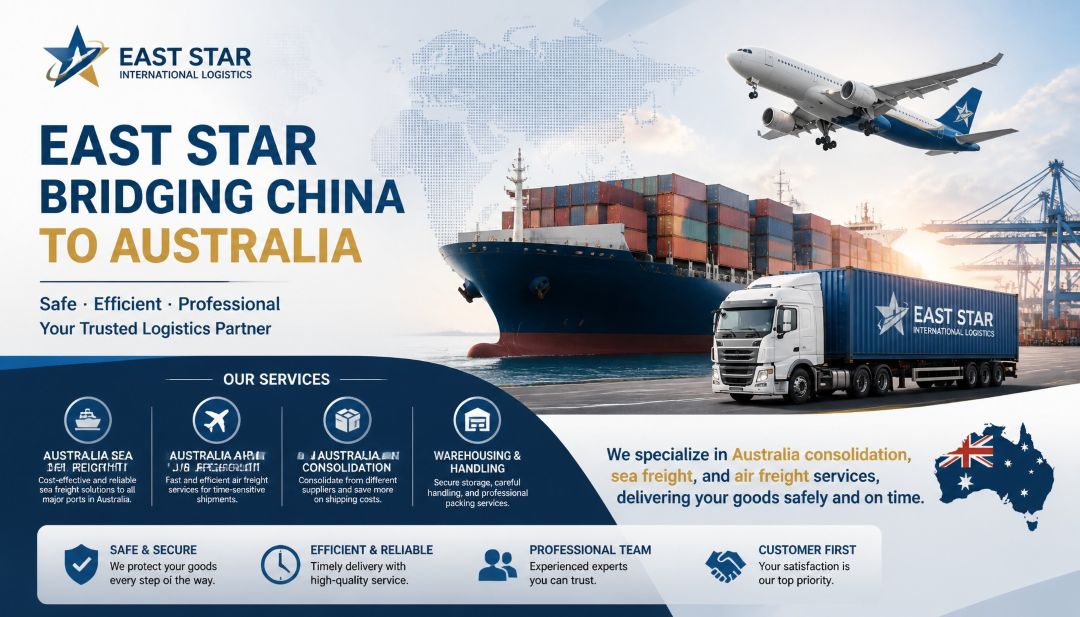
For the latest quotes on Australian consolidation shipping, volume - weight calculations, and information on sensitive goods shipping channels, visit our official website: https://www.dfxgjwl.cn, or call + 86 - 18074611572. As a professional Australian consolidation shipping company, we offer one - stop logistics services with exclusive discounts for students and overseas Chinese. You can track your shipment throughout the process, ensuring a safe and worry - free experience!