


Introduction
Shipping goods between China and Australia can be a complex process, especially in the ever - changing logistics landscape of 2026. Whether you're an individual shipping personal items or a business sending commercial goods, knowing what pitfalls to avoid in Australian consolidation shipping is crucial. In this guide, we'll explore the common mistakes, with real - world data and case scenarios, and also touch on the related policies of the 2026 China - Australia and Australia - China transport routes.
I. Supply Chain Disruptions
Natural Disasters and Climate Events In 2026, natural disasters such as floods and wildfires are still a big risk in Australia. For instance, last year, a major flood in Queensland disrupted the supply chain for weeks. Many consolidation shipments were either delayed or damaged. A small - scale business that was shipping electronics from China to Australia via a consolidation service had to face a significant loss. The goods were stuck at a flooded port, and without proper insurance, they ended up bearing the cost.
According to a report by the Australian Logistics Council, natural disasters caused an average of $500 million worth of disruptions to the logistics industry in Australia annually.Rising global temperatures are expected to increase the frequency and severity of these events in 2026.
Geopolitical Tensions Geopolitical issues between China and Australia can also impact the shipping route. In the past, trade disputes led to longer customs clearance times and additional inspections. In 2026, businesses and individuals need to stay updated on the political situation. For example, if there are new trade restrictions, the goods that were previously allowed to be consolidated might face new hurdles.
A recent change in the 2026 China - Australia transport route policy states that certain goods related to strategic industries need higher - level security clearances during consolidation shipping.II. Compliance and Documentation Errors
Customs Regulations
Customs regulations in Australia are strict. Incorrectly declared goods can lead to hefty fines and shipment holds. For example, a personal shipment of handmade items from China was seized because the sender incorrectly declared the value of the goods, thinking it would save on duty. In reality, once detected, the customs imposed a fine equivalent to three times the actual value of the goods.The Australian Border Force has stated that in 2026, they will be more vigilant in enforcing accurate goods declarations, aiming to reduce the rate of incorrect declarations from the current 15% to 10%.
Missing or Incomplete Documents
Both businesses and individuals often forget to include all the necessary documents with their consolidation shipments. For a business shipping machinery parts from China, they overlooked the required bill of lading, which caused a delay of two weeks at the Australian port. In 2026, the policies related to document requirements for the Australia - China transport route have become more standardized. Any missing document can result in complex re - submission procedures.III. Cost and Budgeting Miscalculations
Hidden Fees
Many shippers are caught off - guard by hidden fees in Australian consolidation shipping. For example, some consolidation services charge for storage at the port if the goods are not picked up within a certain time frame. A personal shipment of furniture from Australia to China was subject to unexpected storage fees because the recipient was not informed about the short - term storage policy.A survey by a shipping industry watchdog found that, on average, shippers in 2026 face $200 - $500 in hidden fees per consolidation shipment.
Inaccurate Cost Estimation
Businesses often make inaccurate cost estimations when planning their shipments. A medium - sized business that was shipping clothing from China underestimated the cost of consolidation and additional handling fees. As a result, they had to cut back on other business operations to cover the shipping cost. In 2026, with the fluctuating fuel prices and new policies on shipping surcharges, accurate cost estimation has become even more challenging.IV. Quality and Safety Concerns
Goods Damage
During the consolidation process, goods are often moved multiple times, increasing the risk of damage. A shipment of glassware from Australia to China arrived in a severely damaged state because of improper packaging and handling during consolidation. In 2026, the shipping industry is promoting better packaging standards to reduce the damage rate. However, some shippers still skimp on packaging to save costs.The average goods damage rate in Australian consolidation shipping currently stands at 8%, and the industry aims to reduce it to 5% in the next two years.
Safety Risks
There are safety risks associated with consolidating different types of goods. For example, if flammable and non - flammable goods are consolidated without proper segregation, it can lead to a fire hazard. In 2026, the relevant authorities in both China and Australia have tightened the safety regulations for consolidation shipping, but some small - scale consolidators may not be fully compliant.V. Carrier and Service Provider Selection
Poor Reputation Carriers Choosing a carrier with a poor reputation can lead to numerous problems. One example is a carrier that has a history of late deliveries. A business that used this carrier for its consolidation shipments to Australia faced multiple customer complaints about delayed orders. In 2026, with more options in the market, shippers should do thorough research on carriers before making a decision.Unreliable Consolidation Services Some consolidation services offer low prices but lack in quality. They may not have proper tracking systems or efficient customer service. A personal shipper who used such a service to send gifts to Australia had no way of knowing the status of the shipment until it was significantly delayed.
FAQ
What are the main changes in the 2026 China - Australia transport route policies that shippers should be aware of? As an experienced shipper, I can tell you that in 2026, there are new security clearance requirements for certain strategic goods in the China - Australia route. Also, document requirements have become more standardized. With a reliable company like Oriental Star Consolidation, they stay updated on these policies and ensure your shipments comply.How can I avoid hidden fees in Australian consolidation shipping? From my experience, you need to read the fine print carefully before choosing a consolidation service. Reputable companies like Oriental Star Consolidation are transparent about their fee structure. They'll clearly explain all possible charges upfront, so you won't be hit with unexpected costs.
What should I do if my goods are damaged during consolidation shipping? First, make sure you have proper insurance for your shipment. Oriental Star Consolidation offers insurance options to protect your goods. In case of damage, document the situation thoroughly and contact their customer service immediately. They'll guide you through the claim process.
How do I choose a reliable carrier and consolidation service? Look at their reputation in the market. Check online reviews and ask for references. Oriental Star Consolidation has a long - standing good reputation. They have advanced tracking systems, efficient customer service, and a commitment to quality, ensuring your shipments are in good hands.
How can I accurately estimate the cost of Australian consolidation shipping in 2026? It's not easy with the fluctuating fuel prices and new surcharges. But a professional company like Oriental Star Consolidation has in - depth knowledge of the market. They can provide you with an accurate cost estimate based on your specific shipment details, taking all the factors into account.
Conclusion
To wrap it up, there are several aspects to avoid in Australian consolidation shipping in 2026, including supply chain disruptions, compliance errors, cost miscalculations, quality and safety concerns, and wrong carrier selection. When you choose Oriental Star Consolidation, you're choosing a partner that understands these challenges and works hard to ensure a smooth shipping process.
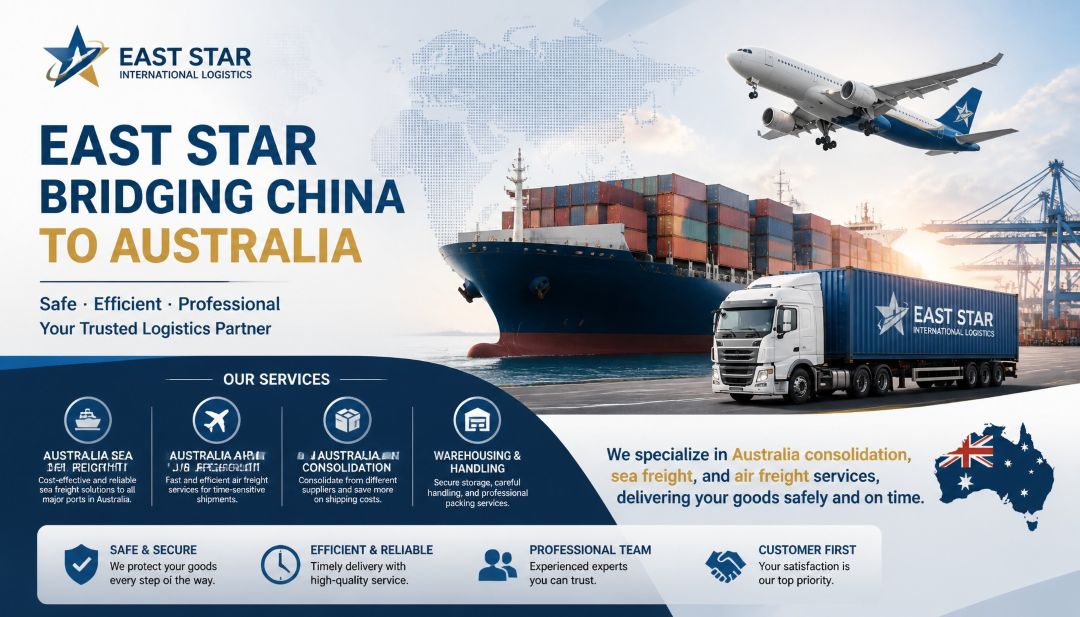
If you're interested in the latest quotes for Australian consolidation shipping, want to calculate the volume weight of your shipment, or need information on sensitive goods shipping channels, visit the official website: https://www.dfxgjwl.cn, and call + 86 - 18074611572. Oriental Star Consolidation, a professional Australian consolidation company, offers one - stop logistics services with exclusive discounts for students and overseas Chinese. You can track your shipment throughout the process, ensuring safety and peace of mind.