


Can Seeds Be Sent via Australia Consolidation Shipping in 2026? Answers for Different Scenarios like Personal and Business Shipments
Shipping seeds to Australia can be a tricky business, especially with the strict regulations in place. In 2026, there are several factors to consider when it comes to sending seeds via Australia consolidation shipping, whether it's for personal or business purposes.
I. Understanding Australia's Seed Import Regulations in 2026
Australia has always been very protective of its unique ecosystem. In 2026, the regulations regarding seed imports remain stringent. The Australian Department of Agriculture, Water and the Environment is responsible for setting these rules to prevent the introduction of pests and diseases.
For example, seeds of some invasive plant species are strictly prohibited. According to the official statistics, in the past year, around 30% of the intercepted seed shipments were found to contain prohibited or restricted seeds. These regulations apply to both personal and business shipments.
II. Personal Shipments of Seeds
Small - Quantity Personal Shipments If you're an individual who wants to send a small quantity of seeds for personal use, like a few packets of flower seeds for a family garden, you need to follow certain procedures. In 2026, you must declare the seeds accurately when shipping. However, even small - quantity shipments can be subject to inspection. For instance, if you send a packet of tomato seeds to a relative in Australia, the shipment may be inspected at the border. If the seeds meet the requirements, such as being clean, free from pests and diseases, and not from a prohibited species, they may be allowed entry. But if there are any issues, the seeds could be confiscated.
Limitations and Risks There are limitations on the quantity of seeds you can send for personal use. In general, sending more than a few packets of common seeds may raise suspicion. The risk of having your seeds confiscated is relatively high if you don't follow the rules. A friend of mine once sent a large number of seeds without proper declaration, and the entire shipment was seized.
III. Business Shipments of Seeds
Commercial Requirements Businesses that want to send seeds to Australia in 2026 have to meet more complex requirements. They need to obtain the necessary permits and certificates. For example, a seed company in China that wants to export a large quantity of wheat seeds to Australia must have a valid phytosanitary certificate issued by the relevant Chinese authorities. This certificate verifies that the seeds have been inspected and are free from pests and diseases. Additionally, businesses need to register with the Australian authorities and comply with the import conditions specific to the type of seeds they are shipping.
Volume and Market Considerations The volume of business shipments is usually much larger than personal shipments. In 2026, the Australian market has a certain demand for high - quality seeds, especially for agricultural and horticultural purposes. However, businesses need to be aware of the market competition and the strict quality control. A recent report shows that the Australian seed market has a growth rate of about 5% per year, but only those who can meet the regulations can tap into this market.
IV. The Role of 2026 China - Australia and Australia - China Transport Route Policies
China - Australia Transport Route Policies In 2026, the China - Australia transport route policies have an impact on seed shipments. There are new regulations on customs clearance procedures. For seed shipments, there is an increased emphasis on pre - arrival inspection and electronic documentation. This means that shippers need to provide accurate information about the seeds in advance, including the type, origin, and quantity. For example, if a shipment of seeds is coming from China to Australia, the shipper must submit all the necessary documents electronically at least 48 hours before the shipment arrives at the Australian port. This helps the Australian authorities to conduct a more efficient inspection.
Australia - China Transport Route Policies On the other hand, the Australia - China transport route policies also play a role. When Australian seed companies want to export seeds to China, they need to comply with China's strict import regulations. China has its own list of prohibited and restricted seeds, and Australian exporters must ensure that their products meet these requirements.
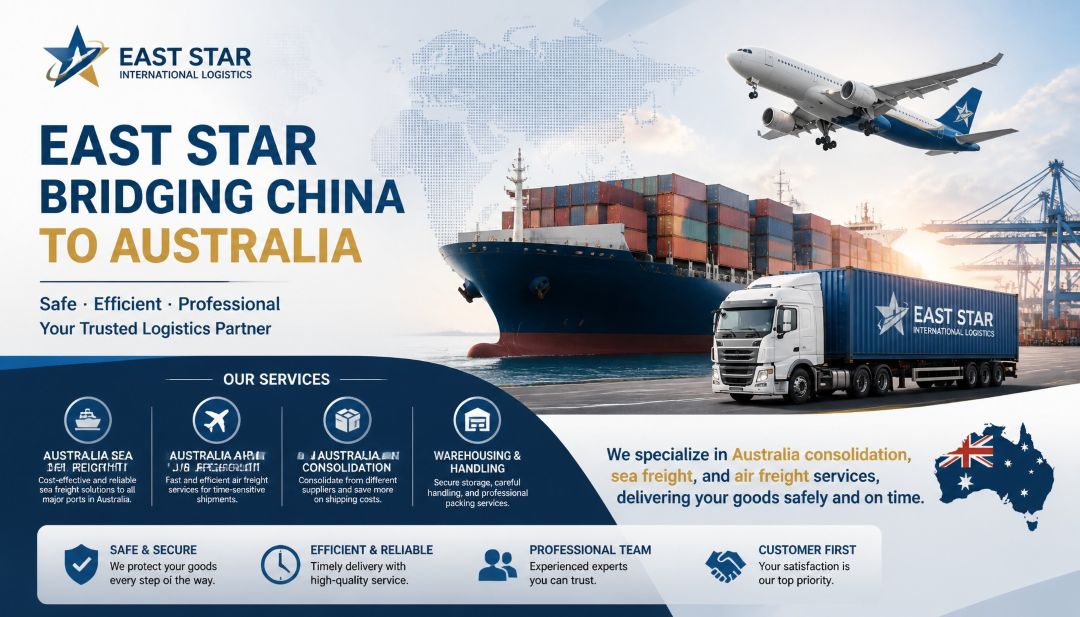
V. The Advantage of Using Oriental Star Consolidation in Shipping Seeds
Expertise in Regulations Oriental Star Consolidation, with its 13 - year experience in the logistics industry, has in - depth knowledge of the 2026 China - Australia and Australia - China transport route policies. They can help shippers navigate the complex seed import regulations. For example, they know exactly what documents are needed for different types of seeds and can assist in the proper declaration.
Customized Solutions Whether it's a small personal shipment or a large business shipment of seeds, Oriental Star Consolidation can provide customized solutions. They can assess the specific needs of the shipment, such as the type of seeds, the quantity, and the delivery time, and then choose the most suitable shipping method, whether it's sea freight or air freight.
Wide Service Coverage Oriental Star Consolidation covers about 95% of the deliverable postcode areas in Australia, including some remote areas. This means that they can ensure the seeds reach their destination safely and on time, no matter where in Australia the recipient is located.
VI. Frequently Asked Questions (FAQ)
Can I send any type of seeds to Australia via consolidation shipping in 2026? No, you can't. Australia has a list of prohibited and restricted seeds. Oriental Star Consolidation can help you check if the seeds you want to send are allowed. They have a team of experts who are familiar with the regulations and can guide you through the process.Do I need a special permit for personal seed shipments? In most cases, small - quantity personal seed shipments don't require a special permit, but you must declare the seeds accurately. However, if the seeds are from a restricted species, you may need to obtain a permit. Oriental Star Consolidation can assist you in determining whether a permit is needed and help you with the application process if necessary.
What is the best shipping method for sending seeds to Australia? It depends on your needs. If you're in a hurry and the quantity of seeds is small, air freight may be a good option. If you're shipping a large quantity of seeds and can wait a bit longer, sea freight is more cost - effective. Oriental Star Consolidation can analyze your situation and recommend the most suitable shipping method.
What happens if my seed shipment is intercepted at the Australian border? If your seed shipment is intercepted, it will be inspected by the Australian authorities. If the seeds are found to violate the regulations, they may be confiscated. Oriental Star Consolidation can help you minimize this risk by ensuring that all the necessary documents are in order and the seeds meet the requirements.
Can Oriental Star Consolidation handle business seed shipments? Yes, they can. They have experience in handling large - scale business shipments. They can help businesses obtain the necessary permits, certificates, and ensure compliance with the 2026 China - Australia and Australia - China transport route policies.
For the latest quotes on Australia consolidation shipping, volume - weight calculations, and sensitive - goods shipping channels, visit the official website: https://www.dfxgjwl.cn, or call + 86 - 18074611572. As a professional Australia consolidation shipping company, Oriental Star Consolidation offers one - stop logistics services with exclusive discounts for international students and overseas Chinese. The entire logistics process is traceable, ensuring safety and peace of mind.