


Shipping goods from China to Australia or vice versa is a common need for many individuals and businesses. In 2026, understanding the price per kilogram for Australian consolidated shipping by sea is crucial, as it varies based on multiple factors. Let's dive into a detailed breakdown of these scenarios.
I. Factors Affecting the Price per Kilogram
1. Distance and Route
The distance between the origin and destination ports plays a significant role. For example, shipping from major Chinese ports like Shanghai or Shenzhen to Sydney, which is a relatively well - traveled route, might have a different price compared to shipping to more remote ports in Western Australia. In 2026, due to new shipping lane developments and improved infrastructure, the efficiency of these routes may impact the cost. For instance, if a new shortcut route is found, it could potentially reduce the shipping time and cost.
2. Goods Type
Different types of goods have different shipping costs. General commodities, such as clothes and electronics, usually have a standard price range. However, sensitive goods like batteries, chemicals, or perishable items require special handling and storage conditions. This means they often come with higher shipping costs. For example, in a recent analysis, shipping perishable fruits from Guangzhou to Melbourne could cost about 25% more per kilogram compared to regular consumer goods.
3. Volume and Weight
The relationship between volume and weight, known as the volumetric weight, is a crucial factor. Shipping companies calculate the chargeable weight based on either the actual weight or the volumetric weight, whichever is higher. Large but lightweight items, like foam furniture, may have a high volumetric weight, leading to a higher price per kilogram. For example, a shipment of large - sized but light - filled cushions might be charged based on its volumetric weight, resulting in a cost that is 1.5 times higher than if it were charged by actual weight.
4. Seasonal Fluctuations
Shipping prices can also fluctuate seasonally. Peak seasons, such as the lead - up to Christmas or during major shopping festivals like Singles' Day in China, often see a surge in demand for shipping. This can cause the price per kilogram to increase by up to 20% compared to off - peak seasons. For example, in the last quarter of 2026, as the holiday shopping season approaches, the price per kilogram for shipping items from China to Australia via sea may rise significantly.
II. Pricing Under Different Scenarios
1. General Goods Shipping
For general goods, such as consumer electronics and household items, the price per kilogram for Australian consolidated shipping by sea in 2026 can range from $3 to $6. This price is based on normal volume and weight conditions and shipping to major Australian ports. However, if the goods are being shipped to a more remote area in Australia, the price could increase by an additional $1 - $2 per kilogram. For example, a shipment of smartphones from Shenzhen to Brisbane might cost around $4 per kilogram under normal circumstances, but if the destination is a small town in Tasmania, it could be closer to $6 per kilogram.
2. Bulk Goods Shipping
Bulk goods, like grains, metals, or large quantities of consumer products, often have a lower price per kilogram due to economies of scale. In 2026, the price for bulk shipping of goods from China to Australia could range from $1.5 to $3 per kilogram. For instance, if a company is shipping a large quantity of steel from Shanghai to Newcastle, the price might be around $2 per kilogram. This is because the shipping company can optimize the use of container space and reduce the overall cost per unit.
3. Sensitive Goods Shipping
Sensitive goods, which require special handling and compliance with strict regulations, come with a premium price. As mentioned earlier, the cost of shipping sensitive goods can be 25% - 50% higher than general goods. In 2026, the price per kilogram for shipping sensitive goods such as lithium - ion batteries or certain chemicals from China to Australia could range from $5 to $9 per kilogram. For example, shipping a batch of lithium - ion batteries from Hong Kong to Melbourne might cost around $7 per kilogram due to the need for specialized storage and transportation.
III. Comparison with Other Shipping Modes
1. Air Freight
Air freight is much faster than sea freight but significantly more expensive. In 2026, the price per kilogram for air freight from China to Australia could range from $15 to $30. This is about 5 - 10 times more expensive than sea freight for general goods. However, for high - value, time - sensitive goods like luxury watches or urgent medical supplies, the additional cost of air freight might be justified.
2. Rail Freight
Although rail freight between China and Australia is not as common as sea and air freight, it could be a viable option for certain routes and types of goods. The price per kilogram for rail freight in 2026 might be more competitive than air freight, ranging from $6 to $10 per kilogram. However, the limited availability of direct rail routes and the need for transfer at ports may pose some challenges.
IV. 2026 China - Australia and Australia - China Shipping Route Policies
In 2026, new policies have been introduced to promote more efficient and sustainable shipping between China and Australia.
1. Environmental Regulations
Both countries have implemented stricter environmental regulations for shipping vessels. This means that shipping companies need to use more eco - friendly fuels and technologies, which may lead to a slight increase in shipping costs. However, it also encourages the development of a more sustainable shipping industry. For example, vessels are now required to meet certain emission standards, and non - compliant ships may face fines or restrictions.
2. Trade Facilitation Measures
To promote bilateral trade, the Chinese and Australian governments have introduced several trade facilitation measures. This includes simplifying customs procedures, reducing paperwork, and increasing the speed of cargo clearance. These measures are expected to reduce the overall time and cost of shipping, making it more affordable for businesses and individuals. For example, the implementation of an electronic customs clearance system has significantly reduced the waiting time at ports.
V. Frequently Asked Questions (FAQ)
1. Can I ship personal items from China to Australia?
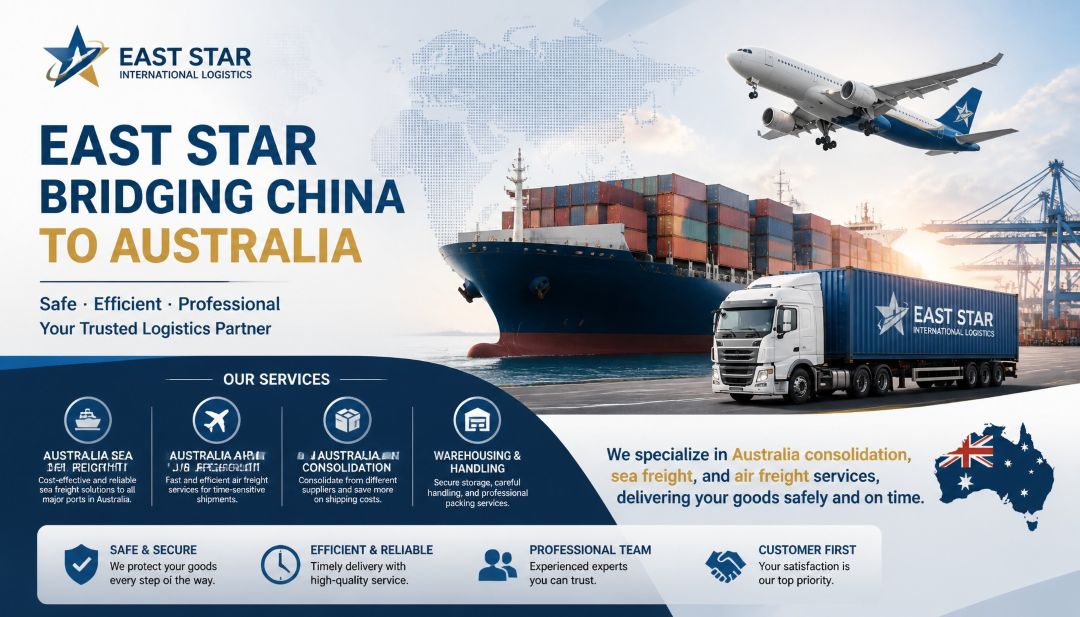
Yes, you definitely can. Oriental Star Consolidation has a wealth of experience in handling personal item shipments. We will take care of all the procedures, from domestic collection to overseas delivery. Whether it's your personal belongings or gifts for your family in Australia, we'll ensure they reach safely and efficiently. Compared to some other companies that may complicate the process, we keep it simple and convenient for you.
2. How long does it usually take for sea - shipments from China to Australia?
For Australian sea freight, Oriental Star Consolidation offers different options. The Australia sea express usually takes about 20 - 25 natural days from our warehouse to the destination. The Australia sea general ship takes around 25 - 30 natural days. This gives you multiple choices based on your urgency and cost preferences. Some other logistics companies may not be able to provide such detailed and accurate time estimates.
3. Are there any restrictions on the types of goods I can ship?
There are restrictions on certain types of goods, especially sensitive goods. However, Oriental Star Consolidation has special channels for many sensitive goods. For example, we can help you ship some electronic products containing small - capacity batteries that other companies may refuse. We'll guide you through the regulations and requirements to ensure a smooth shipment.
4. What if my goods are lost or damaged during shipping?
Oriental Star Consolidation offers insurance services for your peace of mind. In case of loss or damage, we'll assist you in handling the claim process. We have a professional team to deal with such situations, which is more reliable compared to some smaller logistics companies that may not have a well - established claim - handling mechanism.
5. How can I calculate the shipping cost?
The shipping cost is calculated based on the weight and volume of your goods, as well as the shipping method you choose. Oriental Star Consolidation provides a user - friendly online calculator on our official website. You just need to enter the relevant information, and it will give you an accurate quote. This is much more convenient than some other companies that may require you to make multiple inquiries to get a cost estimate.
For the latest quotes on Australian consolidated shipping, volume weight calculation for Australian shipping, and sensitive goods shipping channels, you can visit the official website: https://www.dfxgjwl.cn, phone: + 86 - 18074611572. As a professional Australian consolidation company, we offer one - stop logistics services with exclusive discounts for students and overseas Chinese. You can track your shipment throughout the process, ensuring a safe and worry - free experience!