


In 2026, if you're involved in shipping between China and Australia, understanding the charging scenarios for Australia consolidation shipping is crucial. Whether you're an individual sending personal items back home or a business making international deliveries, the cost structure can vary widely. Let's dive into the details.
I. Personal Shipments
1. Small - quantity Personal Items
For individuals sending a small amount of personal items, such as clothing, books, or small handicrafts, the charge is often based on weight. In 2026, according to industry data, the average cost for shipping up to 5 kg of personal items from China to Australia via consolidation services is around $30 - $50. Take the case of a Chinese student in Australia sending some old textbooks back to China. The total weight of the books was about 3 kg, and the shipping cost was approximately $25 through an Australia - China consolidation service. This approach works mainly because these small - quantity shipments typically don't take up much space. The shipping company can easily fit them into larger containers along with other items, so they focus more on the actual weight for pricing.
2. Personal Items with a Large Quantity or Bulk
When personal shipments include a large number of items or big - sized products like furniture, the volumetric weight may come into play. For example, a couple moving to Australia from China shipped a large sofa and several suitcases. The actual weight of all the items was 80 kg, but due to the large volume of the sofa, the volumetric weight was calculated to be 120 kg. In 2026, for shipments above 100 kg in volumetric weight via Australia consolidation shipping, the cost per kg drops to around $10 - $15. So, the total cost for their shipment ended up being around $1,200 - $1,800. Volumetric weight is factored in because these bulky items occupy a significant amount of space in the shipping container, and the shipping company needs to account for the space they use.
3. Fragile and High - value Personal Items
Special handling is required for fragile items like glassware or high - value items such as jewelry. There's an additional charge for the extra care and insurance. In 2026, the additional charge for fragile items can be around 10% - 20% of the base shipping cost. Suppose someone is sending a set of antique porcelain vases worth $500. The base shipping cost for the weight is $80, but with the additional 15% charge for fragility and insurance, the total cost becomes $92.
II. Business Deliveries
1. E - commerce Small - batch Deliveries
In the e - commerce world, small - batch deliveries are quite common. For Australian businesses ordering small quantities of products from Chinese suppliers, the shipping cost depends on the shipping method and the volume of the order. In 2026, for orders with a volume of less than 1 cubic meter, air - freight consolidation might cost around $500 - $800, while sea - freight consolidation could be as low as $200 - $300. For example, an Australian online boutique ordered 20 pieces of clothing from a Chinese supplier. The total volume of the shipment was 0.5 cubic meters, and they chose sea - freight consolidation, which cost them about $250. These small - batch deliveries are often time - sensitive and need a balance between cost and delivery speed.
2. Large - scale Business Bulk Deliveries
Large - scale bulk deliveries, such as full - container shipments for businesses, follow a different pricing model. In 2026, the cost of a 20 - foot container from China to Australia for sea - freight consolidation is approximately $3,000 - $4,000, while a 40 - foot container can cost around $5,000 - $6,000. A large Australian manufacturing company imported a full 40 - foot container of raw materials from China. The shipping cost was around $5,500, but due to the large volume, they were able to get a better price per unit weight compared to small - batch shipments. Bulk deliveries rely on the efficiency of the shipping company to optimize container space and manage overall shipping costs.
3. Temperature - controlled Business Shipments
When it comes to temperature - controlled shipments, such as food products or pharmaceuticals, there are extra costs for maintaining the right temperature. In 2026, the additional cost for temperature - controlled sea - freight consolidation from China to Australia is around $500 - $1,000 on top of the base shipping cost. An Australian food importer ordered a batch of fresh fruits from China. The base shipping cost was $2,000, but with the extra $700 for temperature - control, the total cost came to $2,700.
III. 2026 China - Australia and Australia - China Shipping Policy Impact
In 2026, new policies have been implemented to streamline the shipping process between China and Australia. On the China - Australia route, there are incentives for shipping companies to use more environmentally friendly vessels, which might lead to slight cost increases for some services. However, the Australian government has also introduced some tariff exemptions for small - scale personal shipments, which can reduce the overall cost for individuals sending items from Australia to China.
For larger business deliveries, new customs clearance procedures have been put in place to speed up the process. While this may not directly impact the shipping cost, it can lead to better efficiency and potentially lower costs in the long run by reducing inventory holding time.
IV. FAQ Section
Q1: What if my shipment has both heavy and bulky items? How is the cost calculated?
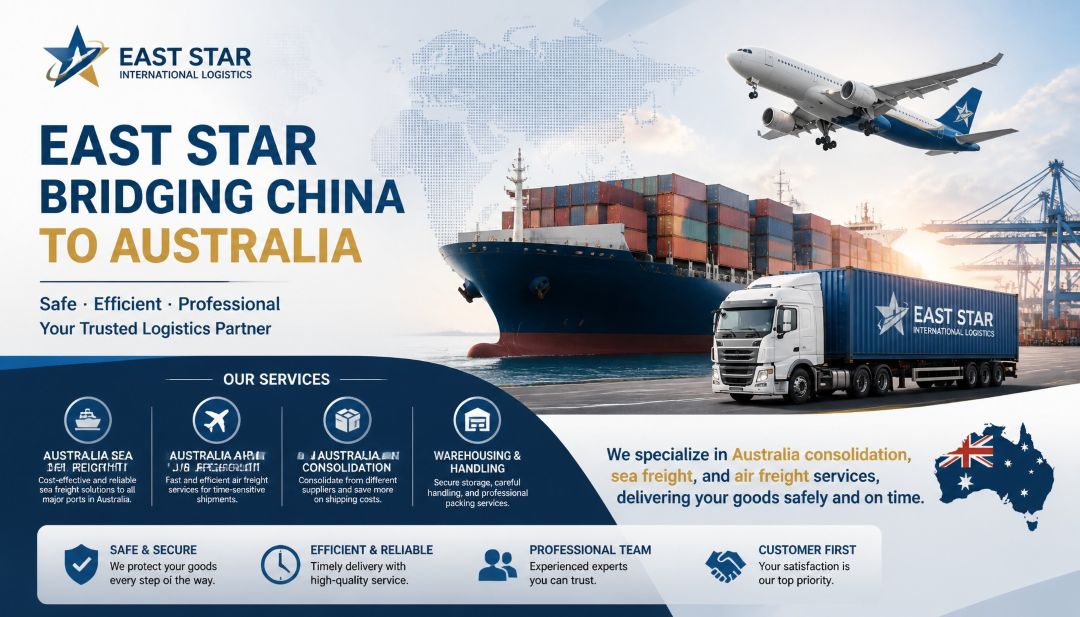
In cases where your shipment has a combination of heavy and bulky items, the shipping company will calculate both the actual weight and the volumetric weight. They'll then charge based on whichever is higher. With Oriental Star Consolidation, our experienced staff will carefully evaluate your shipment to ensure you get the most accurate and cost - effective pricing.
Q2: Can I get insurance for my personal shipment?
Absolutely! You can purchase insurance for your personal shipment. Oriental Star Consolidation offers flexible insurance options. We'll help you assess the value of your items and choose the right insurance plan to protect your belongings during transit.
Q3: Are there any hidden fees for business deliveries?
We know how frustrating hidden fees can be. Oriental Star Consolidation is committed to transparency. We'll clearly outline all the charges, including shipping fees, customs duties, and any additional services. You won't have to worry about unexpected costs popping up.
Q4: How long does it take for a small - batch e - commerce shipment to reach Australia from China?
The delivery time for small - batch e - commerce shipments can vary depending on the shipping method. Air - freight generally takes 3 - 7 days, while sea - freight can take 15 - 30 days. Oriental Star Consolidation offers multiple shipping options, and we'll work with you to choose the best one based on your time requirements.
Q5: Can I track my shipment from China to Australia?
Yes, you can! Oriental Star Consolidation provides a comprehensive tracking system. Once your shipment is on its way, you can easily track its location and estimated delivery time using our online tracking tool or by contacting our customer service team.
Get the latest quotes for Australia consolidation shipping, learn how to calculate the volumetric weight and discover sensitive cargo shipping channels at our official website: https://www.dfxgjwl.cn. Call us at + 86 - 18074611572. As a professional Australia consolidation shipping company, we offer one - stop logistics services. Enjoy exclusive discounts for students and overseas Chinese. Track your shipments all the way, ensuring safety and peace of mind!