


Which food special lines are available for Australia consolidation shipping in 2026? A guide covering various scenarios for individuals and businesses!
Shipping food items from China to Australia has always been a complex yet crucial task. In 2026, there are several policies that directly impact the China - Australia and Australia - China transport routes, especially when it comes to food shipping. This year, the Chinese government has tightened phytosanitary regulations to ensure the safety of agricultural products exported to Australia. On the Australian side, new import quotas have been set for certain food categories to protect local agriculture.
I. Understanding the Key Food Special Lines
Fresh Produce Line Fresh fruits and vegetables are highly perishable, so shipping them requires a specialized cold - chain logistics system. In 2026, the demand for fresh produce from China to Australia remains high. For example, Chinese apples and pears are popular in the Australian market. The shipping time for fresh produce is critical; usually, it takes about 3 - 5 days by air freight. Air freight is the preferred option here because it can maintain the freshness of the produce. According to industry data, the volume of fresh produce exported from China to Australia has increased by 12% compared to last year.Processed Food Line Processed foods such as canned goods and dried snacks are more stable in terms of shelf - life. They can be transported by both air and sea. Sea freight is a more cost - effective option for large - scale shipments. For instance, a medium - sized business in China can save up to 30% on shipping costs by choosing sea freight for exporting canned mushrooms to Australia. However, the shipping time is longer, around 20 - 30 days for sea freight compared to 3 - 7 days for air freight.
Dairy and Meat Line Dairy products and meat are highly regulated due to health and safety concerns. In 2026, strict inspection procedures are in place on both sides. The Australian government requires detailed veterinary certificates and origin declarations for imported dairy and meat. Shipping dairy and meat usually requires refrigerated containers, regardless of whether it is by air or sea. For example, a shipment of Chinese cheese to Australia needs to comply with strict Australian food safety standards.
II. Scenarios for Individuals
Personal Gifts When individuals want to send food as gifts to their friends or family in Australia, they usually prefer small - quantity packages. For instance, sending a box of traditional Chinese snacks like mooncakes or preserved fruits. Most of the time, air freight is a good choice as it is faster. However, one should be aware of the quantity limits. In 2026, the Australian government allows a certain amount of self - used food items without being taxed. For example, an individual can send up to 5 kilograms of packaged snacks duty - free.Relocating or Studying Abroad People relocating to Australia or studying there may want to bring some familiar food items. They might consider a combination of fresh and processed foods. They can use air freight for fresh food they need immediately and sea freight for non - perishable items. For example, a student moving to Australia might send a few weeks' supply of instant noodles and snacks by sea, while also bringing some fresh fruits and vegetables by air.
III. Scenarios for Businesses
Small - scale E - commerce Sellers Small - scale e - commerce sellers in China often face challenges in shipping food to Australia. They usually have limited budgets and need to find a balance between cost and time. Sea freight is a good option for them when they have a relatively long lead - time for restocking. For example, a seller of Chinese herbal teas can use sea freight to ship large quantities of products to Australia, reducing the unit cost of shipping. In 2026, with some logistics companies offering special discounts for small - volume sea freight shipments, small e - commerce sellers can save up to 15% on shipping costs.Large - scale Food Exporters Large - scale food exporters have to deal with high - volume shipments and strict compliance requirements. They usually have long - term contracts with logistics providers. They can take advantage of both air and sea freight depending on the product and the market demand. For example, a large exporter of Chinese seafood may use air freight for high - end, fresh products to meet the immediate market needs in Australia, while using sea freight for frozen seafood to control costs.
IV. The Role of Oriental Star Consolidation in Food Shipping
Comprehensive Solutions Oriental Star Consolidation has a deep understanding of the Australia - China food shipping market. With its 13 - year - experienced core team, the company can provide a complete set of solutions for food shipping. It can handle everything from domestic pick - up to international transportation and Australian end - delivery. For example, when shipping fresh produce, Oriental Star can ensure that the cold - chain logistics system is well - maintained throughout the journey.Compliance Assurance In 2026, compliance with regulations is crucial in food shipping. Oriental Star is well - versed in the new phytosanitary regulations in China and the import quotas and food safety standards in Australia. It can help both individuals and businesses fill out the necessary documents accurately and ensure that the shipments meet all the requirements. For instance, when shipping dairy and meat products, Oriental Star can assist in obtaining the required veterinary certificates.
V. Frequently Asked Questions
Can I ship any kind of food to Australia through Oriental Star Consolidation? Not all food items can be shipped. Oriental Star will check the Australian import regulations for you. Some items like fresh eggs and certain types of nuts may be restricted. However, the company can provide alternative options for you to meet your needs.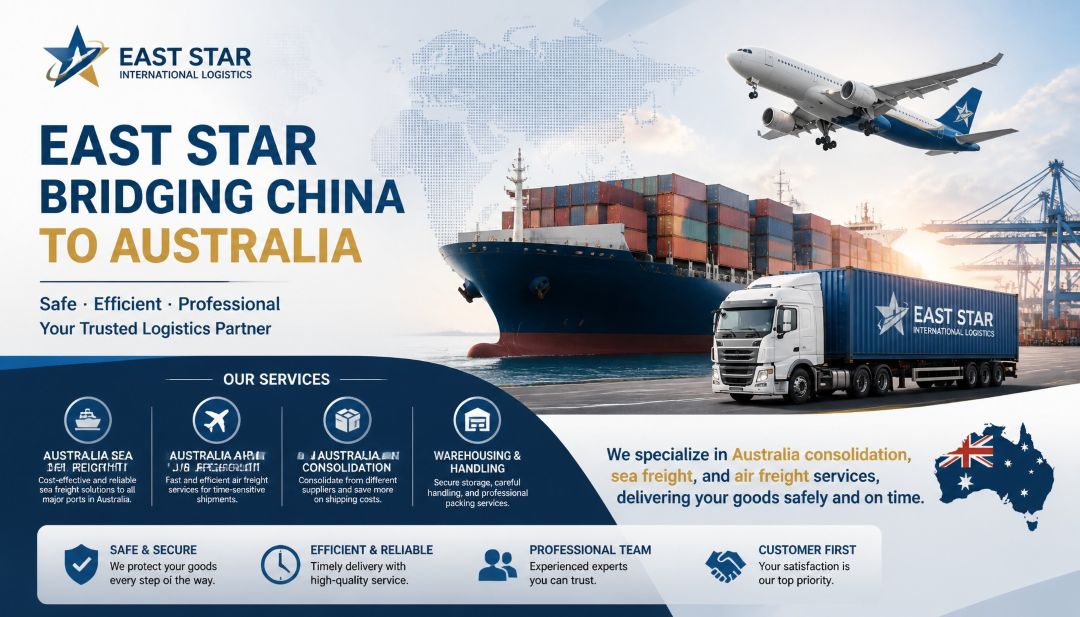
What is the shipping time for food from China to Australia? For fresh produce by air, it usually takes about 3 - 5 days. For processed foods by sea freight, it can take 20 - 30 days. Oriental Star will keep you informed about the shipping progress and expected arrival time.
Do I need to provide any special documents for food shipping? Yes, for food shipping, you may need to provide documents such as origin certificates, health certificates, and packing lists. Oriental Star will guide you through the document - preparation process to ensure smooth customs clearance.
Can Oriental Star handle shipping to remote areas in Australia? Oriental Star can cover about 95% of the deliverable postcode areas in Australia. For remote areas, they will check in advance whether delivery is possible, whether there are any additional fees, and estimate the delivery time.
If you are looking for the latest quotes on Australia consolidation shipping, accurate volume - weight calculations, or reliable shipping channels for sensitive goods, visit the official website: https://www.dfxgjwl.cn. You can also call + 86 - 18074611572. As a professional Australia - focused consolidation company, Oriental Star offers one - stop logistics services with exclusive discounts for international students and overseas Chinese. The entire logistics process is traceable, ensuring a safe and hassle - free experience!