


How is the Australian consolidation shipping charged? A breakdown by different scenarios in 2026 for personal senders and business shippers!
Shipping goods between China and Australia is a common need, whether for personal use or business operations. In 2026, the shipping landscape between these two countries has some unique features, including specific policies for China - Australia and Australia - China transport routes, and different charging models for personal and business shippers. Let's take a closer look at how Australian consolidation shipping is charged in different scenarios.
I. 2026 China - Australia and Australia - China Transport Route Policies
In 2026, the China - Australia and Australia - China transport routes have seen some policy adjustments. For the China - Australia route, there are incentives for green shipping, encouraging shipping companies to use more environmentally - friendly vessels. This has a minor impact on shipping costs as some companies may pass on the investment in green technology to customers. On the Australia - China route, new customs clearance procedures have been streamlined, which reduces waiting times at ports and potentially cuts down on demurrage fees.
II. Charging for Personal Senders
Volume - Based Charging Personal senders often ship smaller items, like clothing, books, or small electronics. Volume - based charging is a common method. For example, if you send a box of clothes, the shipping company will measure the length, width, and height of the box. The volume weight is calculated using the formula: Volume weight = (Length × Width × Height) / Dimensional factor. In Australia, the dimensional factor for most shipping companies is around 5000 - 6000 (cm³/kg). If your box measures 50cm × 40cm × 30cm, the volume is 60000 cm³. Using a dimensional factor of 5000, the volume weight is 12 kg. If the actual weight is less than 12 kg, you'll be charged based on the volume weight.Weight - Based Charging When the actual weight of the goods is greater than the volume weight, weight - based charging applies. Suppose you're sending a set of heavy books. If the actual weight is 15 kg, and the volume weight calculated is 10 kg, you'll be charged according to the 15 - kg actual weight.
Example of Personal Sender Charging Let's say you want to send a package of personal items from China to Sydney. The package has an actual weight of 8 kg and a volume weight of 10 kg. With a shipping rate of $5 per kg for personal consolidation shipping, you'll be charged $50 (10 kg × $5/kg).
FAQ: How do I know if my package will be charged by volume or weight? As a personal sender, the shipping company will calculate both the volume weight and the actual weight. They'll charge you based on the higher of the two. At Oriental Star Shipping, we make this calculation for you and clearly communicate the charging basis before you send your package.
III. Charging for Business Shippers
Bulk Shipment Charging Business shippers often deal with large - scale orders. For bulk shipments, shipping companies usually offer better rates. For example, if a business is shipping 1000 units of a product, they may get a discounted rate per unit compared to a personal sender. A furniture business shipping 50 pieces of furniture from China to Melbourne might get a rate of $30 per piece, while a personal sender shipping one piece of furniture might pay $50.Contract - Based Charging Many businesses enter into long - term contracts with shipping companies. These contracts can lock in a certain price for a specific period. For instance, a clothing brand signs a one - year contract with a shipping provider. The contract stipulates a fixed shipping rate per container, regardless of market fluctuations. This gives the business stability in cost management.
Example of Business Shipper Charging A small - to - medium - sized e - commerce business in China is shipping 500 boxes of electronics to Brisbane. The shipping company offers a bulk rate of $20 per box. So, the total shipping cost for this business shipment is $10,000 (500 boxes × $20/box).
FAQ: Can business shippers negotiate better rates? Absolutely! Business shippers have the advantage of volume. At Oriental Star Shipping, we understand the needs of businesses and are open to negotiating rates based on the volume and frequency of your shipments. We'll work with you to find a cost - effective solution.
IV. Oriental Star Shipping's Advantage in Charging
Transparent Pricing Oriental Star Shipping offers transparent pricing. There are no hidden fees. When you get a quote from us, it includes all the necessary charges, such as customs fees, handling fees, and shipping fees. For example, if you're a personal sender getting a quote for a package, the quote will clearly show the breakdown of each cost component.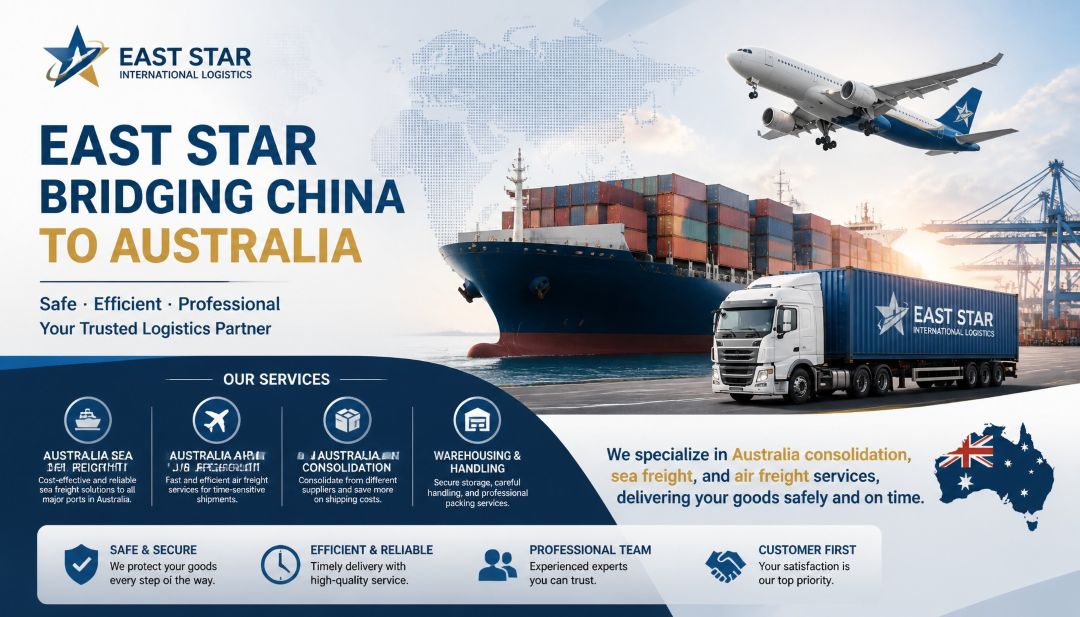
Customized Solutions Oriental Star Shipping provides customized solutions for different types of shippers. A business with special requirements, such as temperature - controlled shipping for perishable goods, can rely on us to arrange the appropriate shipping method. We'll assess your specific needs and come up with a tailored solution that meets your requirements and budget.
FAQ: How does Oriental Star Shipping ensure fair charging? We have a strict pricing policy based on market standards. Our team of experts regularly reviews the rates to ensure they are competitive and fair. We also provide detailed quotes to our customers so that they know exactly what they are paying for.
V. Impact of Shipping Routes and Modes on Charging
Shipping Routes The shipping route can significantly affect the cost. For example, a direct route from Shanghai to Sydney may be more expensive than a route with a transit stop in Singapore. However, the direct route may save time, which is crucial for some shippers.Shipping Modes There are mainly two shipping modes: air freight and sea freight. Air freight is generally faster but more expensive. Sea freight is slower but more cost - effective for large - volume shipments. A business shipping 100 containers of goods will likely choose sea freight, while a personal sender shipping a single high - value item may opt for air freight.
FAQ: What are the advantages of choosing sea freight over air freight? Sea freight is more cost - effective for large - volume and heavy shipments. It can handle a wider range of goods, including dangerous goods and oversized items. At Oriental Star Shipping, we have extensive experience in sea freight and can ensure the safe and timely delivery of your goods.
VI. Relationship between Charging and Delivery Time
Fast - Track Delivery If you need your goods to be delivered quickly, you'll have to pay a premium. For example, an express service from China to Australia may deliver your package within 3 - 5 days, but it will cost significantly more than a standard service that takes 20 - 30 days.Standard Delivery Standard delivery is a more budget - friendly option. It's suitable for shippers who aren't in a rush. A business restocking its inventory can choose standard delivery to save on shipping costs.
FAQ: Can I get a faster delivery time without paying a huge premium? At Oriental Star Shipping, we sometimes offer promotional rates for our expedited services. We also work to optimize our shipping processes to provide relatively fast delivery at a reasonable cost. You can contact us to see if there are any special offers available.
For the latest quotes on Australian consolidation shipping, volume weight calculation methods, and sensitive goods shipping channels, visit our official website: https://www.dfxgjwl.cn, or call us at + 86 - 18074611572. As a professional Australian consolidation shipping company, we offer one - stop logistics services with exclusive discounts for international students and overseas Chinese. You can track your shipment throughout the process, ensuring a safe and worry - free experience!