


How Much is the Tariff Threshold for Australia's Consolidated Shipping: A Breakdown in 2026
When it comes to shipping goods from China to Australia or vice versa in 2026, understanding the tariff threshold is crucial for both personal senders and business shippers. Let's dive into the details and see how it impacts different scenarios.
I. Tariff Threshold Basics
In 2026, the tariff - free threshold for most goods imported into Australia remains a significant point of consideration. For personal items sent to Australia, if the value of the goods is below AUD 1000, they are generally exempt from customs duty and goods and services tax (GST). This is a long - standing policy that still holds true this year. For example, if you're a Chinese student studying in Australia and your parents send you some personal clothing and books worth AUD 800, you won't have to pay any customs duties or GST on that shipment.
Business shippers, on the other hand, have a more complex situation. If the value of a single consignment is below AUD 1000, it also avoids the immediate payment of customs duty and GST. However, businesses need to be aware of the cumulative value of their shipments over time. If a business regularly sends multiple small - value consignments that add up to a significant amount, they may face scrutiny from Australian customs.
II. Impact on Personal Senders
Sending Gifts and Personal Items Personal senders often use consolidated shipping to send gifts, family heirlooms, or personal belongings to Australia. Suppose you're sending a box of traditional Chinese snacks and some handicrafts to your Australian friend. If the total value of these items is within the AUD 1000 threshold, your friend will receive the package without any additional charges. But if the value exceeds this amount, your friend will be responsible for paying the applicable customs duties and GST.Shipping During Relocations When people move from China to Australia, they may use consolidated shipping to transport their household items. The tariff threshold plays a vital role here. For instance, if you're moving your furniture, clothes, and electronics and the total value of the shipped items is below AUD 1000, you save on import taxes. However, high - value items like expensive furniture sets or state - of - the - art electronics can quickly push the total value over the threshold.
III. Impact on Business Shippers
Small - to - Medium - Sized Enterprises (SMEs) SMEs that engage in e - commerce or small - scale exporting to Australia need to carefully manage their consignments. For example, a Chinese handicraft store that ships handmade jewelry to Australian customers. If each shipment is below AUD 1000, they can avoid immediate tariff payments. But they should also be cautious about how often they send these small shipments. If they send too many in a short period, it could trigger an audit from Australian customs.Large Corporations Large corporations usually deal with high - value shipments. They often have dedicated logistics teams to handle customs clearance. Even though they may not benefit from the AUD 1000 tariff - free threshold as much as SMEs, they still need to understand the tariff structure. For example, a large Chinese electronics company shipping smartphones to Australia needs to accurately calculate the customs duties and GST based on the value of the shipment, which can run into thousands or even millions of dollars.
IV. 2026 Policy for China - Australia and Australia - China Transport Routes
In 2026, the China - Australia and Australia - China transport routes are subject to several policies that affect tariff - related matters.
On the China - Australia route, the Chinese government continues to support cross - border trade. There are streamlined customs procedures in Chinese ports to ensure the smooth flow of goods. For example, the "single window" system in Chinese ports allows shippers to submit all necessary documents in one go, reducing the time and cost of customs clearance.
On the Australia - China route, the Australian government has tightened its regulations on the valuation of goods. They are more vigilant about ensuring that the declared value of goods is accurate. This is to prevent shippers from under - reporting the value to avoid customs duties and GST.
V. How Eastern Star Consolidation Can Help
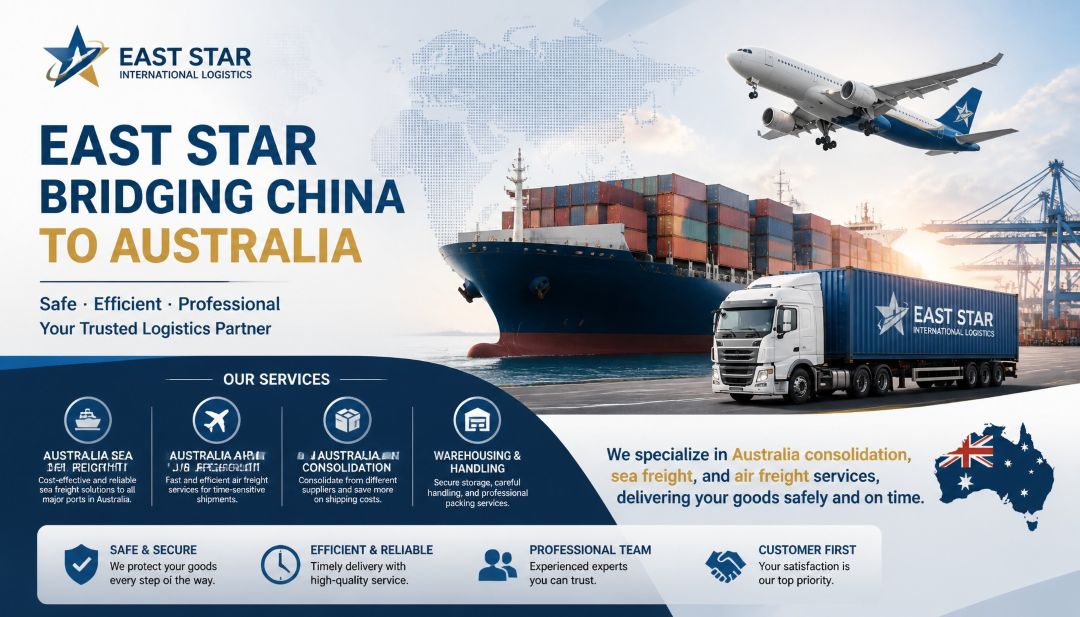
Eastern Star Consolidation, a professional logistics service provider focusing on the Australia route, can offer great assistance in the face of these tariff - related situations.
Accurate Valuation Advice They have a team of experts who can accurately assess the value of your goods. This helps both personal senders and business shippers to avoid over - or under - reporting the value of their shipments. For example, if you're a business sending a consignment of mixed products, they can help you break down the value of each item and ensure that the total declared value is correct.Customs Clearance Facilitation Eastern Star Consolidation has in - depth knowledge of the customs regulations in both China and Australia. They can handle all the customs clearance procedures on your behalf. This saves you the hassle of dealing with complex paperwork and customs officials. Whether it's preparing the necessary documents or communicating with customs authorities, they've got you covered.
VI. Industry FAQ
Q: Can I split a high - value shipment into multiple small shipments to avoid the tariff threshold?
A: While it might seem like a good idea, it's not advisable. Australian customs is aware of such practices. If they suspect that you're splitting shipments intentionally to avoid duties, they can conduct an audit. Eastern Star Consolidation can accurately calculate the value of your goods and suggest a proper shipping plan to comply with customs regulations.
Q: How can I determine the value of my goods for customs purposes? A: The value generally includes the cost of the goods, shipping, and insurance. Eastern Star Consolidation can assist you in determining the correct value. They have experience in dealing with different types of goods and can ensure that you declare the value accurately, avoiding any potential issues with customs.
Q: Are there any additional fees besides customs duty and GST? A: Yes, there may be some additional fees such as handling fees at the port or inland freight charges. Eastern Star Consolidation can give you a detailed breakdown of all potential fees before you ship, so you know exactly what to expect.
Q: What if my shipment is delayed at customs? A: Delays can happen for various reasons, such as incomplete documentation or additional inspections. Eastern Star Consolidation has a dedicated team to handle such issues. They can communicate with customs authorities on your behalf and try to resolve the problem as quickly as possible.
Q: Can Eastern Star Consolidation handle all types of goods? A: Eastern Star Consolidation can handle a wide variety of goods, including general cargo, personal items, and some special - needs goods. However, there are some restricted or prohibited items as per Australian and Chinese customs regulations. They will review your shipment details and let you know if there are any issues with the goods you want to send.
For the latest quotes on Australia's consolidated shipping, volume - weight calculations, and sensitive - goods mailing channels, you can visit the official website: https://www.dfxgjwl.cn, and call + 86 - 18074611572. A professional Australia - focused consolidation company offers one - stop logistics services with exclusive discounts for international students and overseas Chinese. The whole - process logistics is traceable, ensuring a safe and worry - free experience.