


In 2026, the shipping routes between China and Australia are witnessing significant policy changes, which have a direct impact on food special lines for Australia consolidation shipping. Before delving into the details of these special lines, let's understand the relevant policies.
Policy Landscape for 2026 China - Australia and Australia - China Shipping Routes
In 2026, China has introduced a series of policies to promote the export of food products to Australia. There are relaxed inspection and quarantine requirements for certain types of food, aiming to streamline the shipping process. For example, for processed foods with clear ingredient labels and production standards, the inspection time has been reduced by up to 30%. On the Australian side, to ensure food safety, there are stricter regulations on the import of fresh produce. However, for well - established food special lines, these regulations can be navigated more smoothly.
Now, let's explore the food special lines for Australia consolidation shipping in different scenarios.
I. Special Lines for Fresh Food
High - Speed Air Freight Fresh food, such as fruits and seafood, has a short shelf - life. Air freight is the go - to option for these products. For instance, a shipment of fresh cherries from China to Sydney can reach its destination within 24 - 48 hours. The cost of air freight for fresh food is relatively high, but it ensures the freshness of the products. According to industry data, air freight for fresh food accounts for about 30% of the total cost of the product on average.The advantage of air freight is its speed, which is crucial for maintaining the quality of fresh food. However, it also has limitations. The volume of air freight is relatively small, and it may not be suitable for large - scale shipments.
Refrigerated Sea Freight For larger volumes of fresh food, refrigerated sea freight is a more cost - effective option. A shipment of frozen meat from China to Melbourne can take around 20 - 25 days. Refrigerated containers are equipped with temperature - control systems to ensure that the food remains at the appropriate temperature throughout the journey.
The cost of refrigerated sea freight is much lower than air freight, usually about one - fifth to one - third of the air freight cost. But the longer transit time is a drawback, which may affect the freshness of some highly perishable products.
II. Special Lines for Processed Food
Economical Sea Freight Processed foods like canned goods and instant noodles have a longer shelf - life. Sea freight is the most economical choice for these products. For example, a large shipment of canned tomatoes from China to Brisbane can be transported at a relatively low cost. The transit time for sea freight of processed food is around 25 - 30 days.Sea freight can handle large volumes of goods, making it suitable for bulk shipments. It also allows for more flexible scheduling, which is beneficial for businesses that need to plan their inventory.
Express Air Freight for Urgent Orders In some cases, when there is an urgent need for processed food, express air freight can be used. For example, if a supermarket in Perth runs out of a popular brand of instant noodles and needs a quick replenishment, air freight can ensure the products arrive within a few days. However, the cost of express air freight for processed food is significantly higher, usually 5 - 10 times more expensive than sea freight.
III. Special Lines for Dairy and Beverage
Dedicated Milk Powder Lines Milk powder is a high - value product in the Australia - China trade. There are dedicated lines for milk powder shipping. These lines often have strict quality control and handling procedures. For example, from Australia to China, a shipment of milk powder is usually transported in special containers to maintain its quality. The transit time for milk powder shipments is around 15 - 20 days by sea.These dedicated lines ensure the safety and quality of milk powder during transportation, which is crucial for consumer health.
Beverage Shipping Options For beverages such as wine and soft drinks, both sea and air freight options are available. Sea freight is more suitable for large - scale shipments of wine. A container of wine from Australia to Shanghai can take about 20 - 25 days. Air freight is used for high - end or urgent beverage shipments. For example, a new brand of imported soft drink may be shipped by air to enter the Chinese market quickly.
IV. How Oriental Star Consolidation Shipping Stands Out
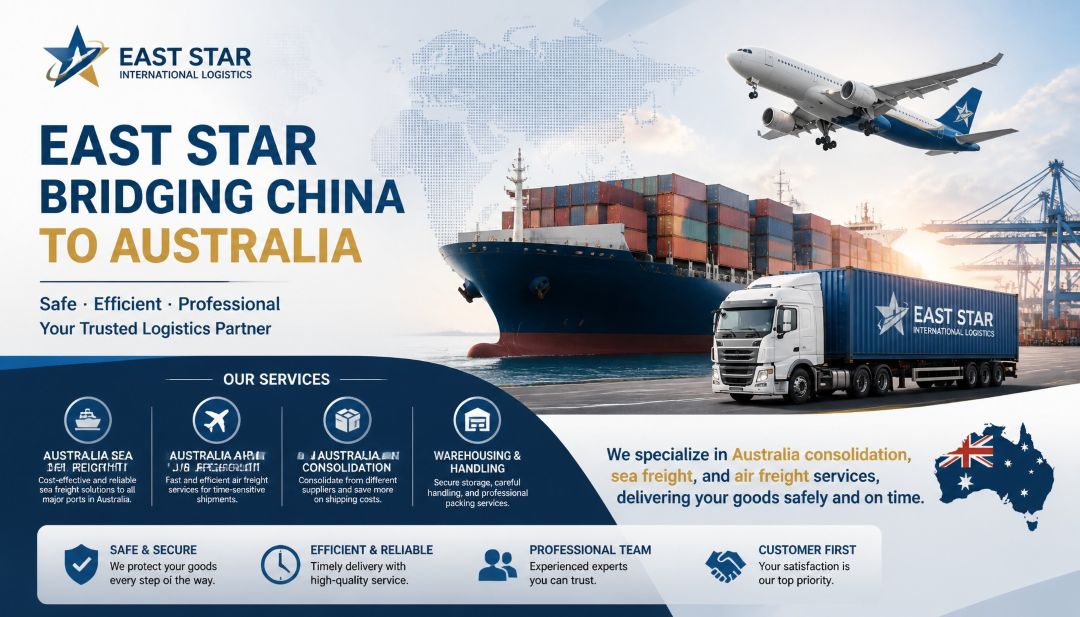
Comprehensive Service Oriental Star Consolidation Shipping has 13 years of experience in the logistics industry. They can handle all aspects of the shipping process, from domestic collection, warehousing, and sorting in China to customs clearance and final delivery in Australia. For example, if you are shipping a batch of fresh fruits, they will ensure that the fruits are properly packed, stored at the right temperature, and cleared through customs efficiently.Customized Solutions They understand that different customers have different needs. Whether you are an individual sending a small package of food or a large - scale business shipping bulk food products, Oriental Star can provide customized solutions. For instance, for a small - scale business shipping processed snacks, they may recommend an economical sea freight option with a suitable transit time.
Wide Coverage Oriental Star's service covers about 95% of the deliverable postcode areas in Australia, including major cities like Sydney, Melbourne, and Brisbane, as well as some remote areas. This wide coverage ensures that your food products can reach the destination no matter where it is in Australia.
FAQ
Q1: Can I ship all types of food to Australia using these special lines?
A: Not all types of food can be shipped. Australia has strict regulations on food imports, especially for fresh produce and some high - risk food items. However, Oriental Star Consolidation Shipping has in - depth knowledge of these regulations and can help you determine which foods can be shipped and how to meet the requirements.
Q2: How much does it cost to ship food to Australia?
A: The cost depends on various factors such as the type of food, the shipping method (air or sea), the volume, and the destination. For example, air freight for fresh food is more expensive than sea freight for processed food. Oriental Star can provide you with a detailed quote based on your specific needs.
Q3: How long does it take to ship food from China to Australia?
A: The transit time varies depending on the shipping method. Air freight for fresh food can take 24 - 48 hours, while sea freight for processed food can take 25 - 30 days. Oriental Star will provide you with an estimated transit time based on your shipment.
Q4: What if my food gets damaged during shipping?
A: Oriental Star has insurance options to protect your goods during transportation. In case of damage, they will assist you in the claim process to ensure you get compensated.
Q5: Can Oriental Star handle customs clearance for food shipments?
A: Yes, Oriental Star has a professional team that is well - versed in customs clearance procedures for food shipments. They will ensure that all necessary documents are prepared and submitted correctly to avoid any delays.
For the latest quotes on Australia consolidation shipping, volume weight calculation for Australia consolidation, and sensitive cargo shipping channels, you can visit the official website: https://www.dfxgjwl.cn, and call + 86 - 18074611572. As a professional Australia consolidation company, Oriental Star provides one - stop logistics services with exclusive discounts for international students and overseas Chinese. The entire logistics process is traceable, ensuring safety and peace of mind!