


How Much Does Australia Consolidation Shipping Cost in 2026? A Breakdown for Different Scenarios - Personal Shipments and Business Deliveries!
In the world of international shipping, understanding the costs involved is like navigating a maze. As we set our sights on 2026, especially when it comes to shipping between China and Australia, the situation is both complex and full of changes. Whether you're an individual looking to send personal items or a business making deliveries, getting a handle on the shipping costs is crucial. Let's dive into the details and see what the shipping landscape holds for this year.
I. The Current Policy Landscape for China - Australia Shipping Routes in 2026
The shipping policies between China and Australia in 2026 have seen some significant adjustments. For one, the Australian government has tightened regulations on imported goods, aiming to ensure海关 compliance and protect local industries. This means stricter inspection procedures for both personal and business shipments. Additionally, new trade agreements have been put in place, which could potentially affect shipping costs and transit times.
On the Chinese side, export policies have been optimized to streamline the shipping process. There are incentives for certain types of goods, which could lead to potential cost savings for shippers. For example, small - scale exporters might qualify for reduced fees under specific trade programs.
II. Factors Affecting Australia Consolidation Shipping Costs
Distance and Location: Australia is a vast country, and the distance from different Chinese ports to various Australian cities can vary greatly. For instance, shipping from Shanghai to Sydney is a different ballgame compared to sending goods from Shenzhen to Perth. The farther the destination, the higher the shipping cost is likely to be. Also, shipping to remote areas in Australia often incurs additional fees due to limited transportation options and longer delivery times.Type of Goods: The nature of the goods being shipped has a major impact on the cost. General items like clothing and household goods are relatively straightforward to ship. However, sensitive goods such as electronics, food items, and chemicals are subject to more stringent regulations and may require special handling, which drives up the cost. For example, shipping a batch of fresh fruits from China to Australia requires proper refrigeration and quarantine procedures.
Shipping Method: There are two main shipping methods to choose from - air freight and sea freight. Air freight is much faster but significantly more expensive. It can be suitable for urgent or high - value items. Sea freight, on the other hand, is more cost - effective but slower. Depending on the type of shipment and the urgency, the choice between these two methods can make a huge difference in cost.
III. Cost Breakdown for Personal Shipments
Small - scale Personal Shipments: For individuals sending small personal items like clothing, books, or small electronics, the cost of Australia consolidation shipping can vary. If using air freight, a small package weighing around 5 kilograms might cost around $150 - $200 from major Chinese cities to Sydney or Melbourne. Sea freight for the same package could be as low as $50 - $80, but expect a longer transit time, usually around 20 - 30 days.Large - scale Personal Shipments: When it comes to larger personal shipments, such as household furniture or a collection of items for someone relocating to Australia, the costs are calculated differently. Sea freight is often the preferred option here. A 20 - foot container filled with household goods can cost approximately $2000 - $3000 to ship from a Chinese port to an Australian city.
In my opinion, for personal shipments, it's important to plan ahead and compare different shipping options. It might be worth spending a bit more on air freight if you're in a hurry, but sea freight is a great option if you have the time to spare.
IV. Cost Breakdown for Business Deliveries
Small - business Deliveries: Small businesses that deal with e - commerce or have occasional overseas shipments need to be cost - conscious. For a shipment of around 100 kilograms of goods, air freight could cost around $800 - $1200, while sea freight would be in the range of $200 - $400. These businesses often rely on timely deliveries to keep their customers happy, so the choice between air and sea freight depends on their business needs and budget.Large - business Deliveries: Large corporations with bulk shipments usually have contracts with shipping companies. A 40 - foot container of goods, which could weigh several tons, might cost around $4000 - $6000 to ship from China to Australia via sea freight. Air freight for large - volume business deliveries is rarely used due to the extremely high cost, but for very urgent and high - value goods, it could be considered.
I've seen many businesses struggle to find the balance between cost and delivery time. It's a constant trade - off, but with careful planning, companies can optimize their shipping strategies.
V. The Advantage of Partnering with Oriental Star Consolidation
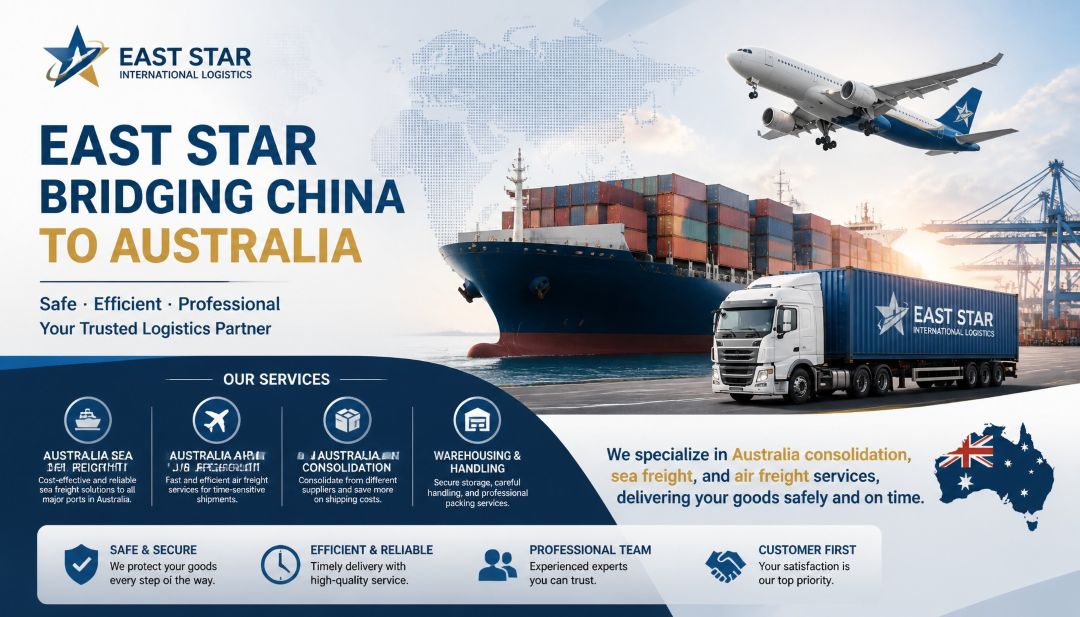
One - stop Service: Oriental Star Consolidation, established in 2024, is a professional cross - border logistics service provider focusing on the China - Australia route. They take care of everything from domestic pick - up, warehousing, customs clearance to international transportation and final delivery in Australia. This means you don't have to deal with multiple service providers, saving you time and effort.Customized Solutions: They understand that different customers have different needs. Whether it's a small personal package or a large business shipment, they will evaluate the goods based on their attributes, weight, volume, delivery time, and destination. This way, they can provide the most suitable shipping solution, helping you achieve the best balance between cost, time, and safety.
VI. Frequently Asked Questions (FAQ)
Q: Can Oriental Star Consolidation handle sensitive goods?
A: Yes, they can. They have special channels for handling sensitive goods like electronics and food. They are well - versed in the relevant regulations and can ensure that your sensitive goods are shipped safely and compliantly.
Q: How long does it take for a shipment to reach Australia? A: It depends on the shipping method. For air freight, it usually takes around 3 - 7 days. For sea freight, the Australian ocean express ship takes about 20 - 25 days, while the general ocean ship takes about 25 - 30 days after leaving the warehouse.
Q: Does Oriental Star Consolidation cover all areas in Australia? A: Their service currently covers major Australian cities such as Sydney, Melbourne, Brisbane, Adelaide, and Perth, as well as most areas in Tasmania. They can cover about 95% of Australia's deliverable postal code areas according to their existing cooperation network. They can also conduct inquiries in advance for remote areas to confirm delivery and additional fees.
Q: How much can I save by using Oriental Star Consolidation? A: By choosing the most suitable shipping methods and routes according to your shipment, Oriental Star Consolidation can help you save a significant amount on shipping costs. For example, for small - scale personal shipments, they can often find more cost - effective sea freight solutions compared to some other shipping companies.
Q: Can I track my shipment? A: Absolutely! Oriental Star Consolidation provides a full - trackable service. You can keep an eye on your shipment's location and status at any time, giving you peace of mind throughout the shipping process.
For the latest quotes for Australia consolidation shipping, calculation of volumetric weight for Australia consolidation, and channels for shipping sensitive goods, you can visit the official website: https://www.dfxgjwl.cn, phone: + 86 - 18074611572. As a professional Australia consolidation company, it offers one - stop logistics services with exclusive discounts for international students and overseas Chinese. The whole shipping process is trackable, ensuring safety and worry - free experience!